A finished basement can hide part of the loss
Water at the bottom of the stairs may extend beneath carpet, behind finished partitions, or into storage and utility areas. A plumbing release, drain backup, and outside-water entry need different source work. Do not enter a flooded lower level to inspect equipment or collect more details.
Call (866) 552-5141 with your Arvada address, the affected rooms and levels, and whether the source is controlled. Discuss independent provider availability, the initial assessment, and any plumbing or roofing work already arranged. The responding business confirms its scope and charges.
Keep clear of water around utility equipment
Below-grade rooms can contain electrical panels, heaters, pumps, or other equipment. Do not walk through water to reach a breaker, appliance, or shutoff. Keep occupants away until hazards are evaluated by the appropriate professionals. Signs of immediate danger require leaving the area and contacting emergency services or the relevant utility.
The building's condition and surrounding water can also affect the timing of removal. Deep flooding should not be treated as a routine pump rental job. A qualified evaluation can determine whether structural or outside-pressure concerns must be addressed before the room is emptied.
Describe the lower level and where water appeared
Tell the provider whether the space is finished, partly finished, or used for storage. Mention a window area, exterior entry, floor drain, sump system, or pipe only if it is relevant to what you observed. These details help define the investigation for the actual Arvada building.
Ask how utilities, contents, access, and affected wall or floor layers will be handled before removal starts. If water repeatedly enters, drainage, plumbing, or building-envelope work may be needed alongside restoration. Extraction by itself does not correct a continuing source.
Find the cause before choosing a permanent fix
Water might come from a broken pipe, failed appliance, drain backup, rainfall entering through an opening, or another source. A damp lower wall or a puddle at a low point does not establish the origin. The professional investigating the source may need to look outside the room as well as at the visible water.
Cleanup handles the damage already inside. Drain repairs, waterproofing, foundation work, or pump replacement may be separate services. Ask which provider is responsible for the source correction. Otherwise, the room may be restored cosmetically while the reason it floods remains unresolved.
Finished rooms add concealed material decisions
A bare concrete floor can be easier to see than a layered finish, but an unfinished room may still contain wet framing, insulation, or contents. In a finished lower-level room, drywall, trim, cabinetry, carpet, and floor systems introduce more surfaces that may need assessment.
The contractor should explain what can be cleaned or dried and what is damaged or unsuitable to retain. Water can remain behind wall finishes or below a floor covering after the visible pool is removed. The scope needs to account for those assemblies rather than stopping at the exposed floor.
Water removal is one stage of the work
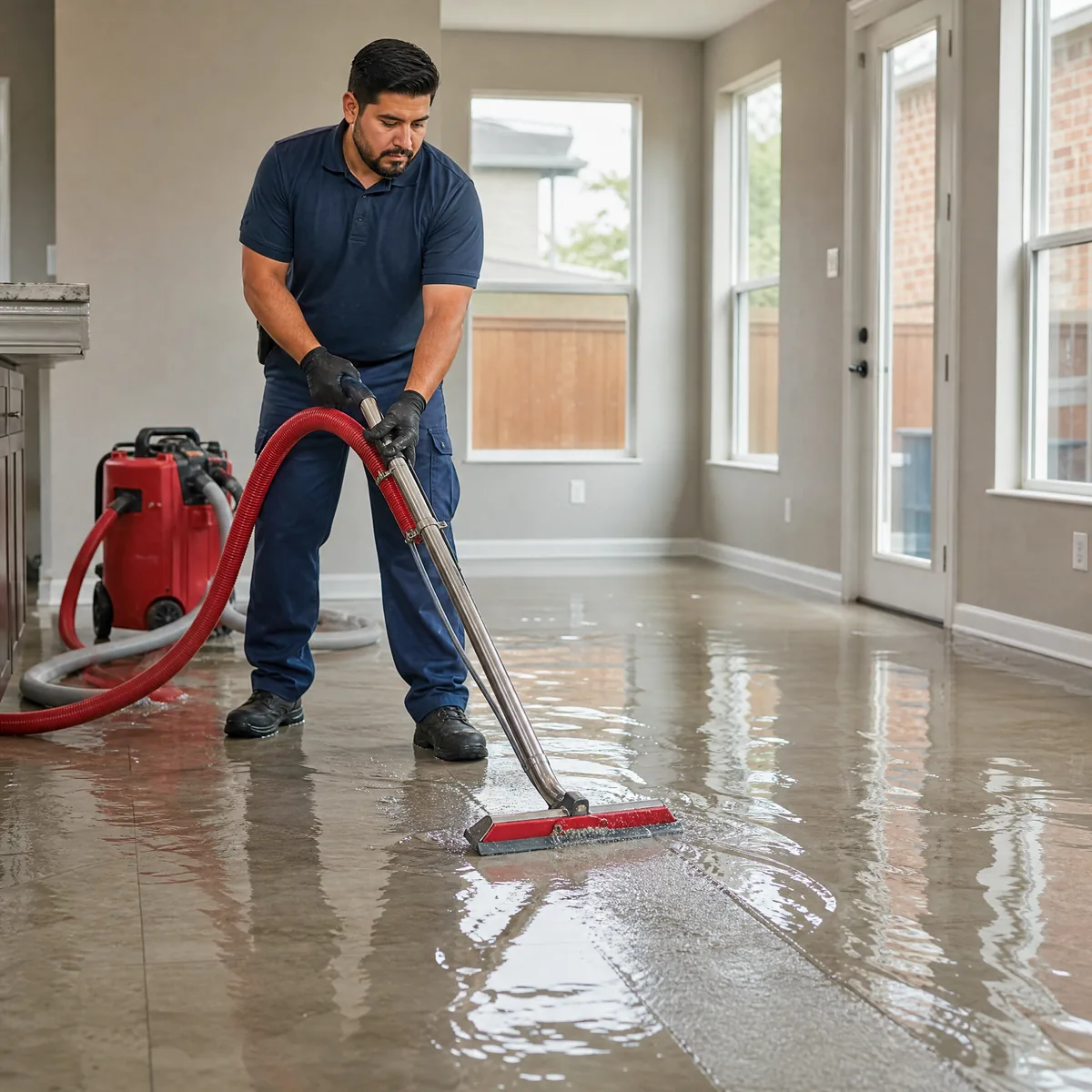
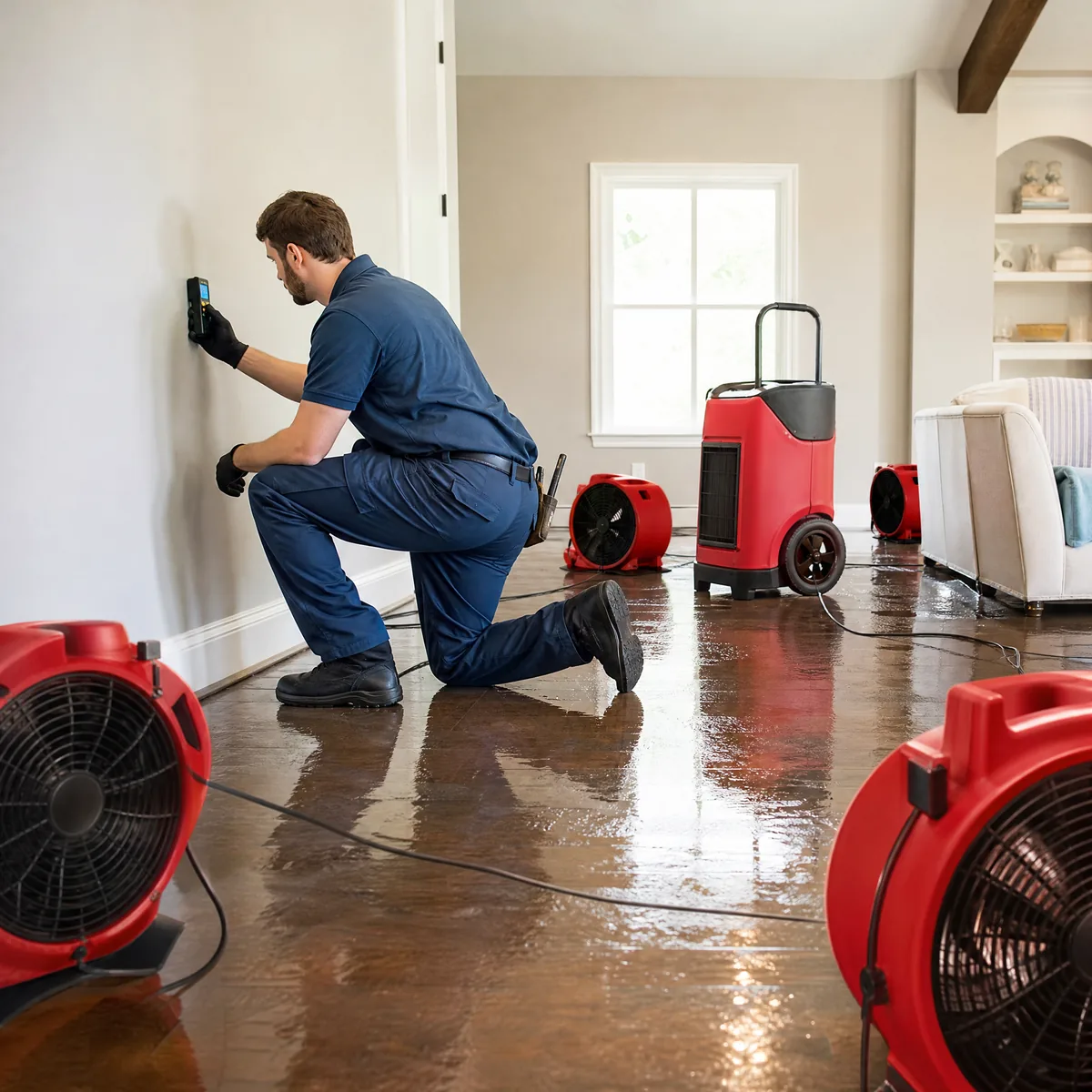
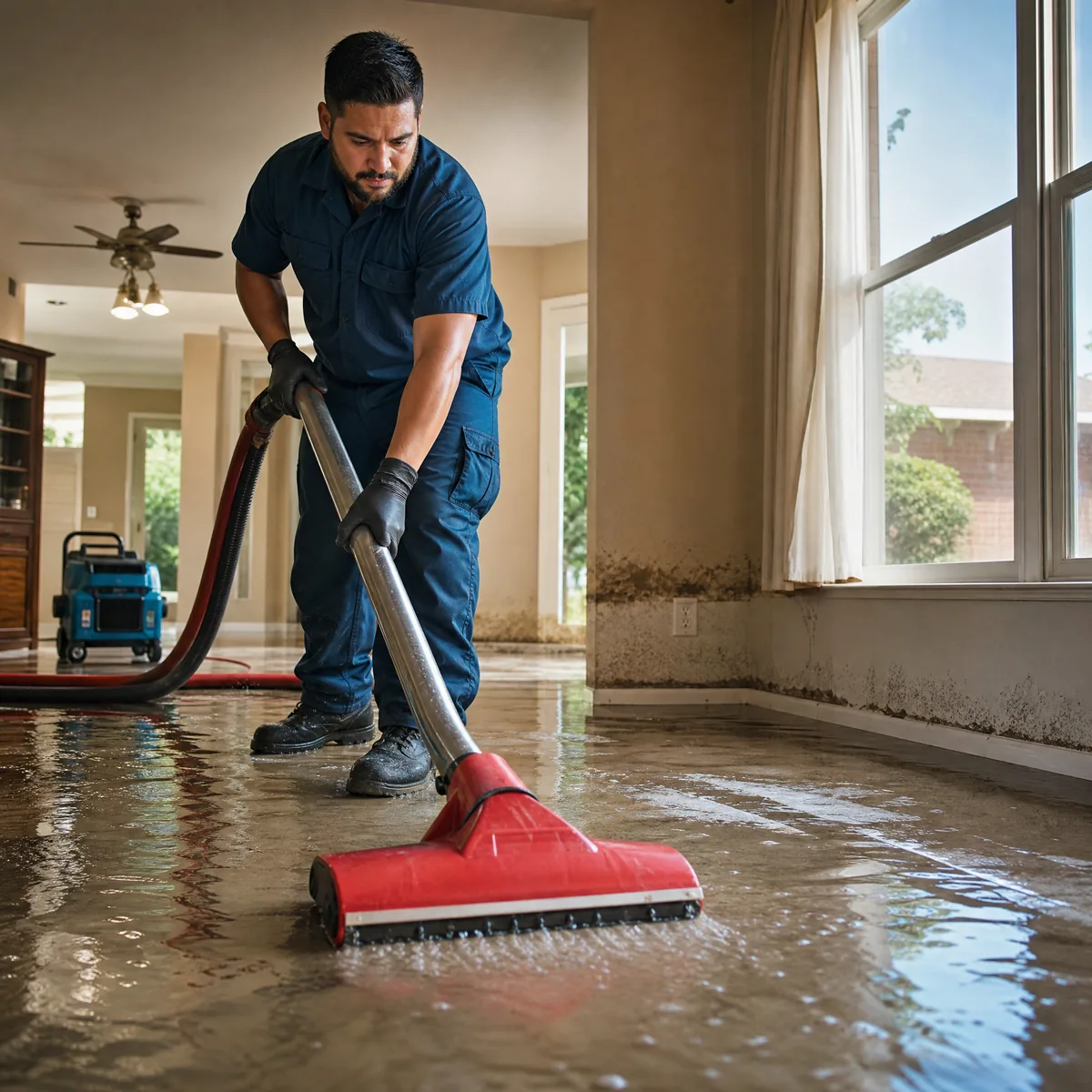
Once removal is appropriate, the provider may use pumping or extraction equipment to clear accessible water. Contamination influences cleaning and material decisions. Remaining wet components may require monitored structural drying before repairs begin.
Ask how the contractor will document the work area and evaluate completion. If equipment remains after the initial visit, clarify access for follow-up checks and what the measurements are intended to establish. A room emptied of water can still need several different tasks before it returns to ordinary use.
Sort stored contents deliberately
Items kept on the floor may be affected before wall damage becomes noticeable. Cardboard, textiles, wood furniture, tools, and electronics do not all receive the same treatment. The provider may handle some contents and recommend another specialist for others. Identify valuable or sensitive items before general removal begins.
Keep an item list and photographs where safe. Agree on disposal authority and record belongings moved off-site. Do not restart water-affected equipment because it has dried externally. The relevant qualified technician should evaluate the device separately from the restoration of the room around it.
Explain the access route when arranging service
An outside door, interior stairs, a narrow hallway, or a locked utility area can influence equipment movement. Provide the full Arvada address, the correct entrance, and the person who can grant access. Mention tenant schedules or building-management requirements before expecting a crew.
If the incident follows a wider storm, explain any blocked route or continuing water outside. Current scheduling depends on access, demand, and provider capability. The call should establish those conditions rather than assume every lower-level loss can use the same equipment or receive the same arrival time.
Keep the recovery linked to source correction
Retain the source findings, cleanup estimate, invoices, and any drying information. Before returning contents or replacing finishes, clarify whether drainage, plumbing, or other repairs remain. If wetness returns, those records can help the appropriate professional evaluate the continuing issue.
Call (866) 552-5141 for basement or below-grade water-removal help in Arvada. Tell the provider immediately if sewage is suspected. The sewage cleanup page and storm cleanup guide explain why the source changes the response.
Basement water removal: common questions
Is this the correct service for water beneath my house?
Does pumping solve a recurring water problem?
Can I enter to move boxes first?
What should be ready before the room is refinished?
Help for your Arvada address
See the Arvada and nearby area guides for access details. Call with the full address to confirm provider coverage and current availability.